
If you own or manage rental properties, a worn hardwood floor raises a pretty practical…
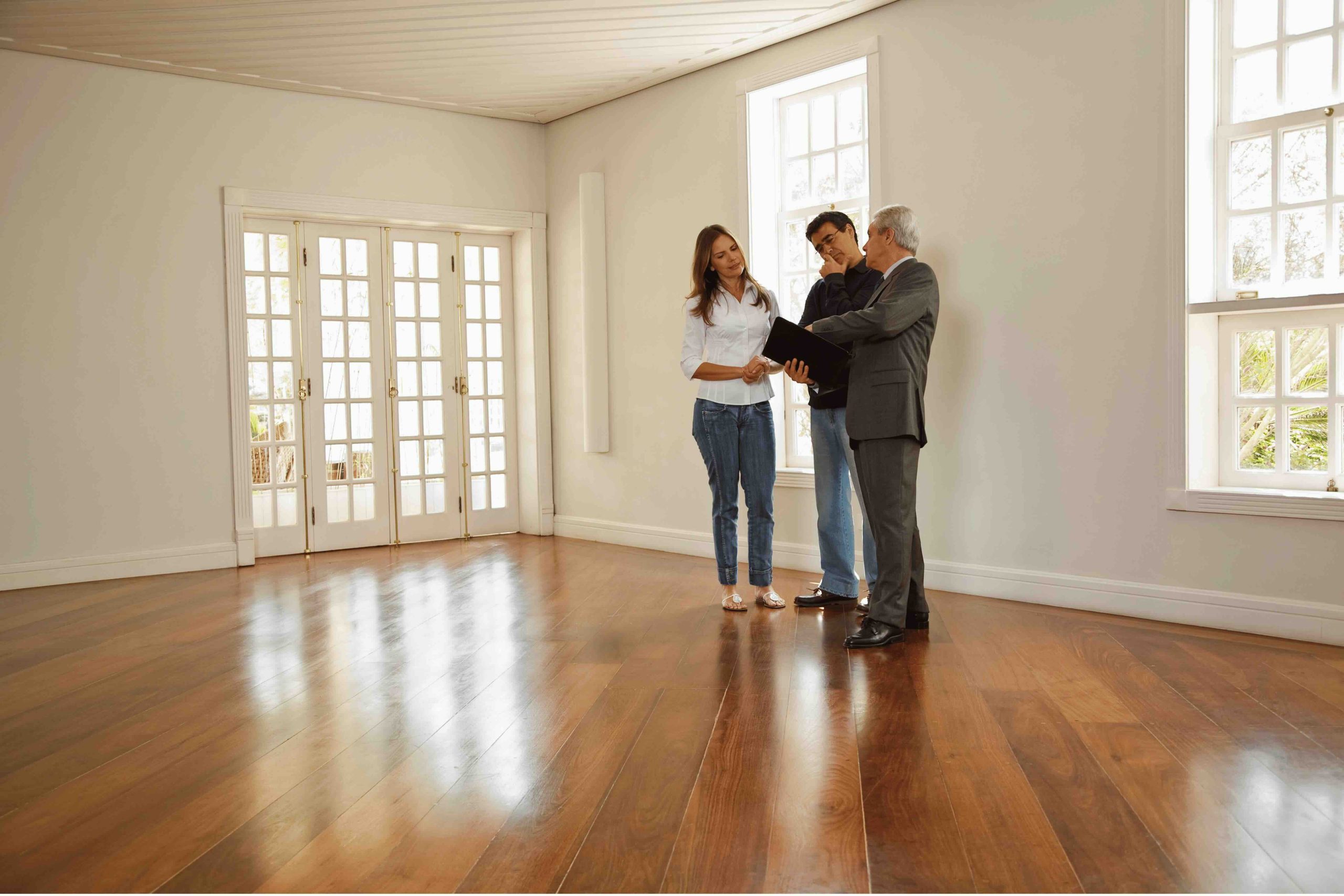
What to Look for in Hardwood Floors During a Home Showing
Open houses move fast, and hardwood floors are easy to admire without really looking at them. A floor can show beautifully under staging lights and still need a few thousand dollars of work within the first year.
You don’t need to be a flooring expert to spot the things that matter. A few simple checks during the showing can give you a much better idea of what you’re buying — and whether you should be budgeting for refinishing, repairs, or something more involved after closing.
Start With Solid vs. Engineered
One of the first things I’d want to know is whether the floor is solid hardwood or engineered.
Solid hardwood is one piece of wood all the way through, so it can usually be sanded and refinished multiple times over its life. Engineered flooring has a real-wood wear layer over a plywood base. Depending on how thick that top layer is, it may be refinished once or twice — or sometimes not at all.
You can often get a clue without pulling anything apart. Look around a floor vent, closet threshold, or anywhere you can see the edge of a board. A solid piece of wood through the full thickness usually means solid hardwood. If you see a thin wood layer over a different material underneath, you’re likely looking at engineered flooring.
Why does this matter? Because two floors can look almost identical during a showing but give you very different options ten years from now.
Look for Gaps, Cupping, and Unevenness
Don’t get too worried about every little gap you see, especially in an older home. Wood moves. Seasonal gaps and small spaces between boards can be completely normal.
What I’d pay more attention to are large or inconsistent gaps, especially if they’re concentrated in one part of the house. That can point to moisture, movement, or an installation issue that’s worth asking about.
Also look for cupping — when the edges of the boards sit higher than the middle. Cupping usually tells us the wood has taken on moisture from somewhere. That doesn’t automatically mean the floor needs to be replaced, but you want to understand why it happened before assuming a refinishing will fix everything.
I’d be especially alert to it around kitchens, bathrooms, exterior doors, lower levels, or anywhere plumbing or moisture could be involved.
Check the Finish, Not Just the Color
Freshly cleaned hardwood can photograph really well. That doesn’t necessarily mean the finish is in good shape.
Walk the areas that get used the hardest: entryways, hallways, in front of the kitchen sink, around the dining table, and at the bottom of the stairs. That’s where a floor will usually tell you its real condition.
Look for dull areas, scratches, gray or discolored wood, and places where the protective finish appears to be gone entirely.
If the finish is worn through in a few spots but the wood itself looks solid, that’s usually a straightforward refinishing job rather than a full replacement, which makes a real difference in what you’d budget after closing.
Pay Attention to What Your Feet Are Telling You
People naturally look down at the floor, but don’t forget to feel it while you’re walking.
A little movement in an old house isn’t necessarily alarming. But if one section feels noticeably soft, bouncy, or different from the surrounding floor, make a note of it.
The problem may not actually be the hardwood. Sometimes what you’re feeling is coming from the subfloor or structure underneath it, which can turn what looks like a flooring project into a bigger repair.
Ask About Age and Species, Especially in Older Philadelphia Homes
In Philadelphia rowhomes, Main Line colonials, and other older homes throughout the area, we come across original hardwood all the time. Oak is common, and so are older pine floors in certain homes.
A floor being old isn’t necessarily a negative. In fact, some of the older solid hardwood we work on has plenty of life left in it. It may look rough when you first walk in, but after sanding and refinishing, it can be one of the best features in the house.
What matters more is how much material is left, how many times the floor has already been sanded, and whether there are deeper issues such as moisture or damaged boards.
The listing agent may not know the flooring history offhand, but it’s worth asking when the floors were last refinished, whether any sections have been replaced, and whether there have been known leaks or water issues.
Our guide to what home inspectors flag about hardwood floors covers some of these same issues from the seller’s side and can give you additional context before making an offer.
A Quick Checklist for Your Next Showing
You don’t need to spend 20 minutes inspecting the floors. These five checks will tell you quite a bit:
- Walk the whole floor. Pay attention to soft, springy, or noticeably uneven areas instead of only looking at the surface.
- Check a board edge. A vent, threshold, or transition can help you figure out whether you’re looking at solid or engineered hardwood.
- Look across the floor at an angle. Cupping, crowning, waves, and unevenness are much easier to see with light moving across the boards than when you’re looking straight down.
- Inspect the high-traffic areas. Entryways, hallways, kitchens, and stairs usually show the true condition of the finish first.
- Compare rooms. Changes in species, plank width, color, or direction can tell you that part of the flooring was added or replaced later. That’s not necessarily a problem, but it’s worth understanding what was done and why.
And one last thing: don’t assume an ugly floor is a bad floor.
We see plenty of floors that look pretty rough during a showing but are actually great candidates for refinishing. We also see floors that look beautiful from six feet away but have issues underneath that matter a lot more.
The goal isn’t to decide whether the floor looks perfect. It’s to figure out what it needs.
Thinking of Making an Offer?
If you’re house hunting in Philadelphia, the Main Line, or South Jersey and want a second opinion before committing to a property, Hudson Hardwood can help.
Send us a few photos or request a free estimate, and we’ll give you a realistic read on what the floors may need, what’s likely salvageable, and what you should be budgeting for after closing.
📞 Call (215) 694-7296 or request a free quote.
Related Posts


